Thursday, October 20, 2005

Quality, not Quantity


I was reading John Stuart Mill today, and he really made some good points. He spoke about over-
population, and how the individual is being lost in society. I have to agree. I am an extensive writer, putting something to words at least once a day, not counting required writing for school, etc. I write for the pure enjoyment of it. Actually, I should probably say I write for the pure necessity of it. The choice isn't really mine to make...I don't think I could NOT write.


However, lately, I've been pursuing it more. I've been trying to get my writing out into the world more. There are a number of competitions and publishing events that have received pieces by me. I haven't heard back from any of them yet, but should by the end of the year probably.

In any case, I've thought recently about what it would have been like for me two hundred years ago. During that time, there were few writers. My imagination says that I would have been able to be successful in those days, as there would have been fewer voices screaming out from the masses. However, the thought then strikes me that perhaps this is because there was less literacy. In actuality, that "perhaps" should probably not be in that last sentence as I am sure that is the reason. With this logic, I have to continue and realize that chances are that literacy would not have befallen me. The case is most likely that many people are writers, but up until the last few decades the opportunity to write has evaded many.

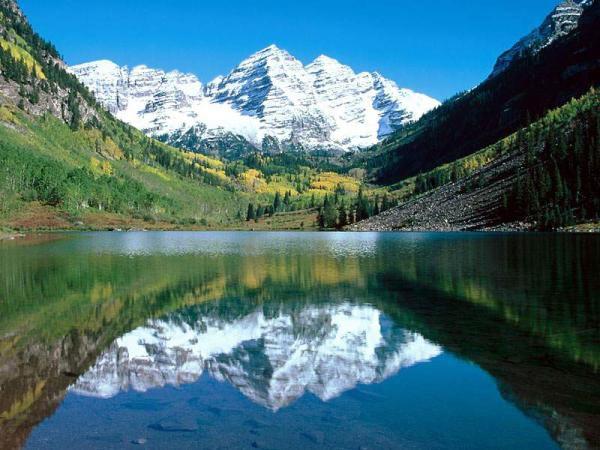
John Stuart Mill writes about solitude, and the fact that it is becoming extinct to us. As our society expands, crushing every flower underfoot as a weed (to paraphrase him), we gain a larger support for a large, but less important expanse of culture. We have grown at such a pace, doing everything in our power to support more and more and more people, while none of our efforts have gone to increasing the quality of these people. Mill thinks there is a lot to be said for being locked away in solitude at the feet of nature's majesty. I would agree...spending a few months (years?) locked away from society out in a tent, at the roots of a mountain, its streams bubbling by as the icy winter hibernates the flora, waiting for spring's grace to coax them back to the surface, sure sounds nice to me.

"If the earth must lose that great portion of its pleasantness which it owes to things that the unlimited increase of wealth and population would extirpate from it, for the mere purpose of enabling it to support a larger, but not a better or happier population, I sincerely hope, for the sake of posterity, that they will be content to be stationary, long before necessity compels them to it." - John Stuart Mill in "Principles of Political Economy (1848).

Picture taken from "It's a Beautiful World..." email,


Friday, September 30, 2005

What the Red Sox Mean to Me


The Red Sox mean I am lying on my grandmother’s bed, and I am only six. I am breathing in the smell of popcorn, too heavy with butter and salt, and watching the glowing screen on the dresser. She wears her concern well, and occasionally lets loose with a barrage of curses. She has been passionate this way since she was a child, and some would see a Hyde where Jekyll was all they had known. Her father was with her when she was watching the Red Sox game. You see, because of the Red Sox, my grandmother had never grown up like the rest of us had to.

The Red Sox mean I am with my family. They mean that those that I hold dearer than myself are present, in body or spirit. What looks to you like a large green wall is a family story that dates back long before I was born.

The Red Sox mean that it is okay to swear, no matter how old you are.

The Red Sox mean that we all fail. We all can try our hardest, and fail, and it is still okay. We can push as hard as we are able, and still not make it, but our friends and family will still be there to catch us and cheer us on the next time.

The Red Sox mean perseverance. After trying so hard, and failing for so long, and wishing for so long, we can succeed; when we do our celebration will be epic. That celebration will always come.

The Red Sox mean I am home. Even when I am five thousand miles away, I am still home. I can still feel my mother’s arms around me, holding me tight in anticipation as that pitch is thrown. I can see my grandmother’s tears. I can see her father in them, even though we never met.
For me, the Red Sox mean 178 Villa Street. I am transported to that home I grew up in whenever I watch the Red Sox, whether I am in Germany or Arizona.

The Red Sox mean mortality. Those that are gone are still here. Their graves are empty. They roam between us, watching and waiting. They are felt around us as we are cheering – or cursing. Those that have left are still felt when we watch. The mere watching resurrects them; I can recall the feeling of my grandfather in the house. I can recall the dark basement, lit only by the television and my family’s pulses. Those I watch the Red Sox with now, and those that watch with me, will live forever in my soul each time I watch the Red Sox. I will live in that as well, and someday, long after I die, I will sit with my son and grandchildren, and watch on as they watch the Red Sox play.

Picture taken from http://blog.tmcnet.com/blog/tom-keating/image-files/red-sox-baseball.jpg


Thursday, September 15, 2005

Did you know?

Did you know that Iraq’s electrical and sewage systems were largely non-operational by the summer of 2004, and now, a year later, have lost roughly another 50% of their operational capabilities?

Did you know that the government only counts American casualties that occur in Iraq? They do not count the dozens of hundreds that died en-route to Landshtul, Germany for treatment – nor do they count those that die days/weeks/months later from complications of injury.

Did you know that close to 100,000 Iraqis have died from combative violence since our invasion of said Sovereign nation?

Did you know that Halliburton has had reported record profits every year since our invasion began?

Did you know that women - whom before the invasion held a number of professional positions such as doctors, nurses, engineers, etc. – now no longer are able to hold those positions for fear of the radical Muslims that largely control Iraq? Women now have less freedom than before we invaded.

Did you know that Iraq’s constitution, which we have sacrificed close to 2,000 reported American children for, will impose and enforce the Muslim law code of Shaa? In this fundamentalist code, which was followed by Taliban Afghanistan and is followed by Iran, women must wear Burkas, cannot speak in public, cannot travel alone, and if raped, would be sentenced to death unless they can provide three direct witnesses to the crime?

I guess the whole main point is this…

Did you know that things have only gotten worse since we started, and continue to erode as time goes on, leaving us with a mounting pile composed of the corpses of American children, Iraqi children, women, and men…all to destabilize one of the most liberal countries in the Middle East, leaving it open to take-over by radical Islam in the form of a Constitution that enacts Shaa Law? We sent our sons and daughters to die to topple the Taliban, only to send more sons and daughters to die in order to prop up the same form of government in Iraq – a type of government that is unwanted by many Iraqis.

Also, just a side note….

For those that say, “We have to stay the course and fight to win so that we honor those that have died!” I say go to hell with your circular, blood thirst-fed, warmonger, brain-dead reasoning. So, you are saying, “Many have died, and so we have to let more die.” That’s ridiculous…and so I say…

Did you know that no war has ever, in written human history, been won by an organized force fighting against a guerilla army?

The point is that many have died, and so we must send more to die until the point is reached upon which we will retreat, as a guerilla army cannot be defeated; at which point, civil war will occur and Iraq will descend into even more chaos than it is in currently. The only difference is, twice the number of casualties will have been weighed down upon us. I say it will be for naught; let us leave NOW while the next of our children is yet to die…not afterwards.

picture taken from http://encyclopedia.laborlawtalk.com/wiki/images/1/13/Tears.jpg


Tuesday, August 16, 2005

There is Nothing You can Do


Really. There is nothing you can do. They say a person can make a change, but is that really true anymore in the Warholian Nightmare of a world we live in? There is nothing to do; even when the chance to gain the spotlight comes, it fades so quickly as people lose interest that no change can truly be accomplished. Even Cindy Sheehan, the mother protesting down at Crawford Ranch, really has no hope. Short of an armed revolt by thousands of people, which by the way would be quickly squashed allowing a military state the excuse to garner complete control, there is nothing we can do. The machine is too gluttonous. Nay, it is not a glutton any longer. It is gorged; fat, obese, giant, gargantuan, overwhelming. It used to be, not so long ago, a person could throw their life on the line to stop up the gears; Gandhi, M.L.K.Jr., Malcolm X, John Lennon. But now, it has gotten so big, that not even a person can stop it. To go further into the reality in which we live, I would say that slowing it is not even possible. Protesting, screaming, yelling, hunger striking, self-immolating...they are all empty gestures. The only way to get something done is to get involved with the machinery directly, and the only way to do that is to have already sold your soul to it.

Our situation is hopeless.

Or is that just how they want us to feel?

Picture taken from http://www.sfu.ca/adm/gear.3.jpg


Wednesday, August 10, 2005

Trees and Seeds


We are each as trees. We grow at our own pace. We should plant ourselves firm in the ground we occupy, not hurrying to spread our canopies further than they are at present. We should not insist that others do so either. A person's leaves may have grown brightly green, with long branches, straining out to reach each point they can, absorbing all the sunlight and air that they can with each moment, astounding the trees around them all the while.

But other trees stand small, brown, with few leaves with which to amaze. Some balk at such trees, "Grow faster! Grow taller! Grow quicker! Grow further up and out! Grow, grow, grow!" These trees may, and these trees may not. But we are not to place the weight of our comparisons to the mighty elms and oaks upon them. Let them grow in their own season. Do we question the frail, brown, dry mimosa when it sits year-round with not much to show? We do not, for we know that when it's season comes, and the spring air arrives, it will flourish and bloom a most beautiful bouquet of sights and colors, the likes of which are incomparable. The same applies to the other small trees. They may not have a season, but a year. And when it arrives, they, too, may flourish as a mimosa in March. But they also may not. They may sit there, unassuming, and unnoticed by those around them; but a small twig poking up from the dirt. The foolish may say, "This is a useless thing!" But the fool is the sayer, who cannot see the roots beneath, reaching down, drawing gently from the earth, and returning vital nutrition to the earth, which provides a means of sustenance to the purple tree blooming brightly beside. Or it may not. It may offer nothing now, and ever. But each thing in its own place, for its own reason, not for us to chide.

Picture taken from http://www.michigan.gov/images/MDA_RadishSeedSprout_03_61026_7.jpg